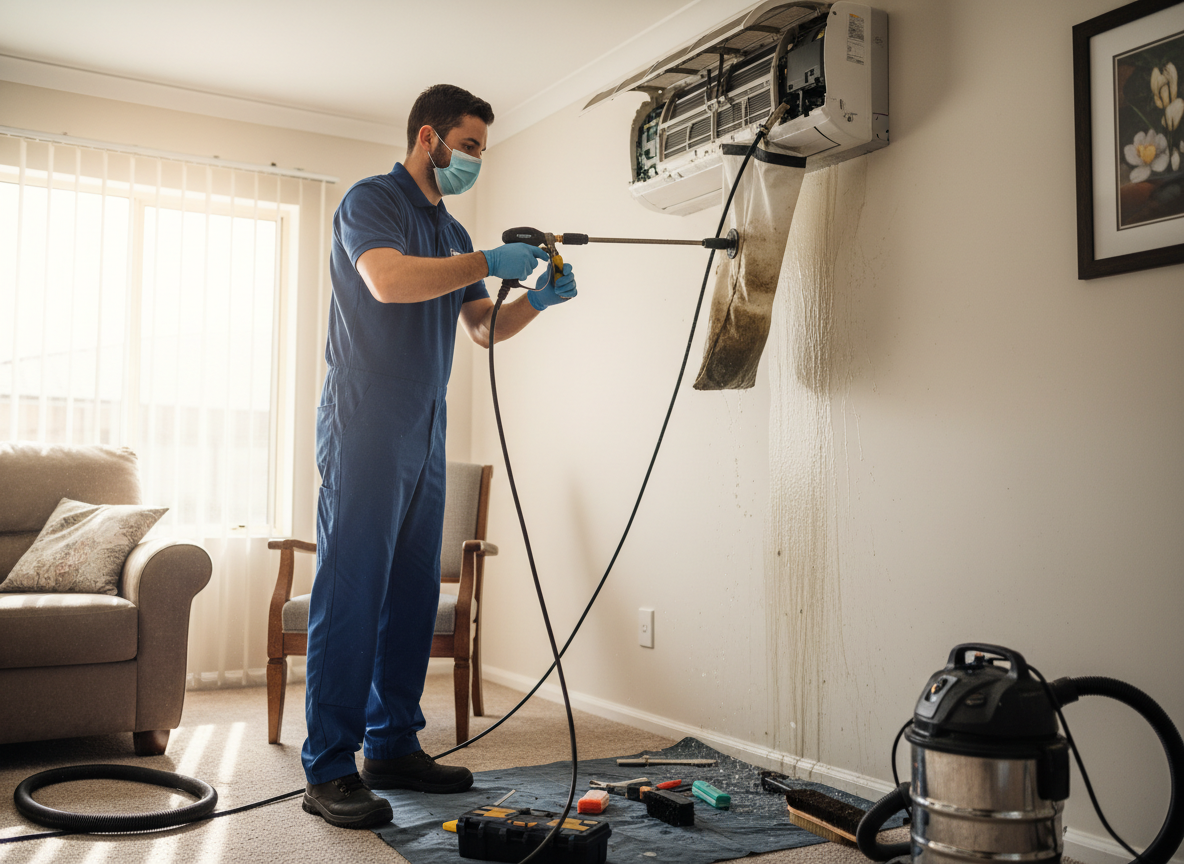
Oakley homes built from the 1920s through the 1970s often have narrow, rigid metal duct runs that trap construction dust and pet dander for decades. When summer humidity hits, that buildup feeds mold on evaporator coils and reduces airflow, forcing the system to run longer. Our AC cleaning service starts with a camera inspection through existing registers so we can map every branch before we agitate and extract debris without cutting walls.
Cincinnati’s freeze-thaw cycles around Oakley loosen insulation around attic ducts, letting unconditioned air leak into the system. During cleaning we seal those gaps with mastic and replace crushed flex runs that homeowners in the surrounding Bond Hill and Hyde Park streets commonly overlook. This step alone restores static pressure readings that were 30 percent above design before we arrived.
We always pull the blower housing on site and wash the wheel rather than spraying cleaner through the return. Residue left on the motor windings shortens life in older single-speed units still common on Williams Avenue and surrounding blocks. After the wash we measure amp draw to confirm the motor is no longer working against restricted airflow.
What Changes the Job in Oakley
Older plaster walls and tight crawl spaces mean we often work through smaller access points than newer subdivisions allow. We carry drop cloths and boot covers on every truck because most Oakley homeowners still have original hardwood floors that scratch easily during equipment movement.
Technician insight
In Oakley the thing that catches most people out with ac cleaning service is the amount of old plaster dust packed behind the original floor registers in pre-1950 homes; if you don’t pull those registers first the negative-air machine just recirculates the fine white powder back into the living space.
Hidden Blockage in Oakley Two-Story
Homeowner noticed weak airflow on the second floor. Camera showed a collapsed flex run above the kitchen where the original plaster ceiling had settled. We replaced the crushed section, cleaned the trunk line, and restored even pressure to every register without opening walls.
How it works
- 1
Initial Camera Inspection
We scope every accessible duct run from the Oakley address to locate heavy buildup and damaged sections.
- 2
Coil and Blower Cleaning
Evaporator coils and the blower wheel are washed on site with non-acidic solution to restore airflow without residue.
- 3
Debris Extraction
Negative-air machines pull loosened material through the trunk line while we agitate branch ducts.
- 4
Final Airflow Verification
We recheck static pressure and temperature split before leaving the Cincinnati job site.
Pricing
Pricing depends on system size, number of returns, and whether attic or crawl-space access is needed; we provide an upfront quote after the camera inspection.