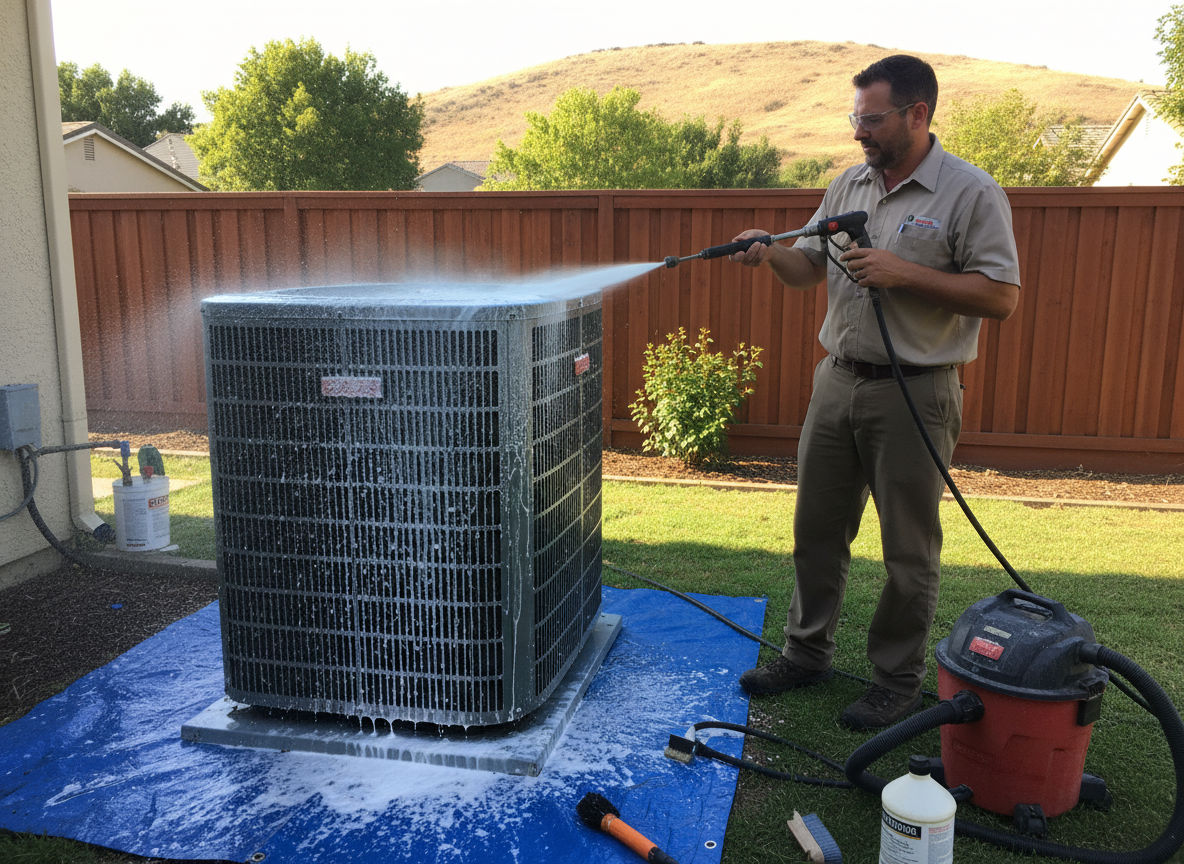
Coil cleaning HVAC targets the evaporator and condenser coils that sit inside or outside Oakley homes built before 1970. These units often carry thick layers of dust, pet dander, and pollen pulled from nearby wooded lots along Madison Road. Neglected coils restrict airflow, raise energy use, and allow moisture to linger, creating conditions for mold inside the duct runs that serve the second floors of many two-story brick houses.
In the Oakley area, summer humidity combined with winter furnace operation packs coils with a mix of outdoor allergens and indoor fibers. Technicians use non-acidic foaming agents and soft-bristle brushes sized for the narrow fin spacing found on equipment installed in the 1980s and 1990s. Proper rinsing prevents residue that can corrode aluminum fins common on units near the Little Miami River corridor.
Access panels on older furnaces in Oakley basements are frequently painted shut or undersized, requiring careful removal to avoid damaging the cabinet. After cleaning, static pressure readings are taken at the return and supply to confirm restored airflow before the system is returned to normal operation.
Technician insight
In Oakley, the thing that catches most people out with coil cleaning hvac is the painted-shut access panels on 1960s and 1970s furnaces tucked behind finished basement walls; forcing them usually bends the cabinet and creates new air leaks that undo the cleaning benefit.
Hidden Coil Buildup In Oakley Two-Story
A homeowner on Appleton Street reported weak upstairs airflow during humid weeks. Inspection showed the evaporator coil completely blocked by decades of fine dust from the home's original ductwork. After targeted foam cleaning and proper rinsing, static pressure normalized and the system maintained even temperatures without short cycling.
How it works
- 1
System Inspection
Technicians examine coil condition, note fin damage, and check for standing water in the drain pan before any cleaning begins.
- 2
Coil Access
Panels are removed using the correct tools to avoid stripping screws common on equipment in Oakley homes.
- 3
Foam Application And Agitation
Non-corrosive foam is applied, allowed to dwell, then agitated with brushes matched to fin spacing.
- 4
Rinse And Dry
Low-pressure rinse removes debris followed by compressed air to dry coils and prevent moisture-related issues.
- 5
Reassembly And Test
Panels are replaced, filters checked, and system operation verified with static pressure readings.
Pricing
Upfront quotes based on system access and coil condition.