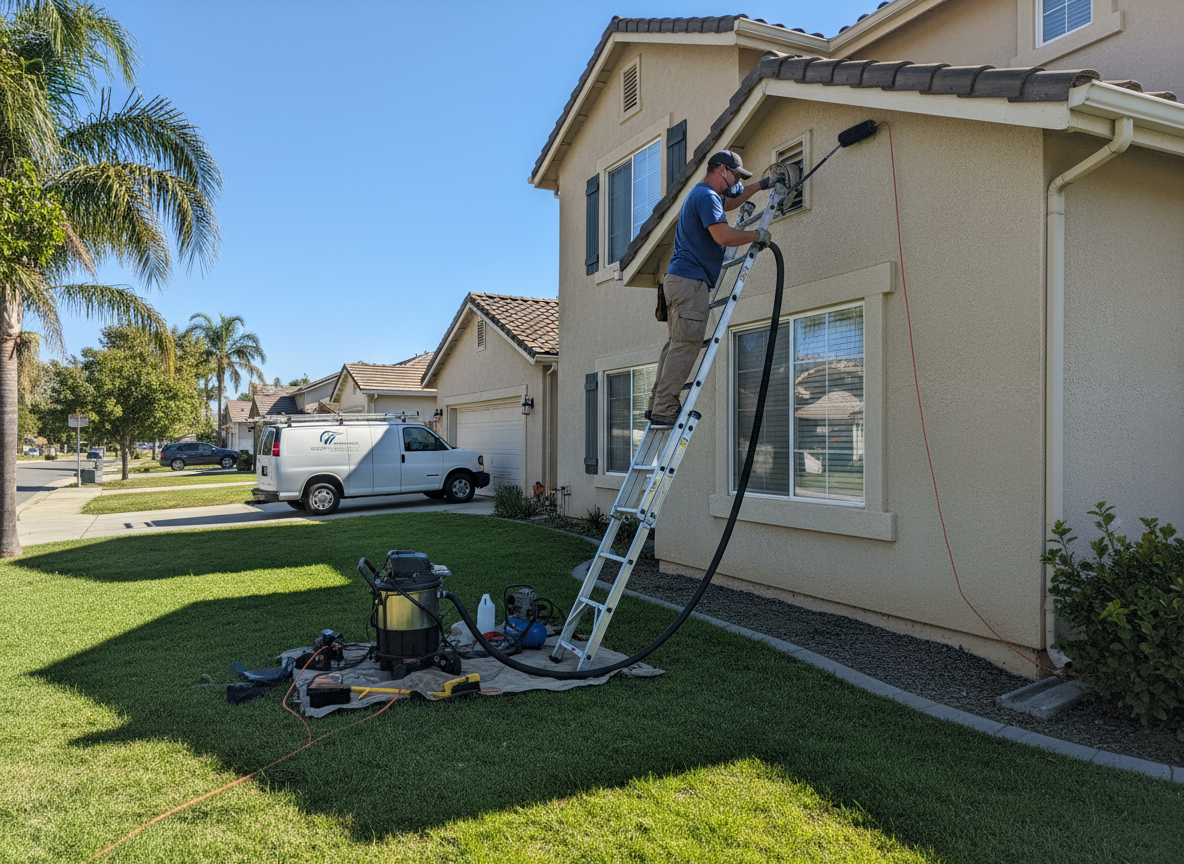
Oakley homes, many built before 1950 with brick and frame construction, often route dryer vents through long attic runs or exterior walls that collect heavy lint. In Hamilton County winters, temperature swings cause condensation inside metal ducts, turning loose lint into stubborn blockages that restrict airflow and force dryers to run longer. Technicians at Orbit Wrench pull the dryer, disconnect the flexible transition hose, and use rotary brushes sized for 4-inch and 6-inch rigid pipe common in these neighborhoods to break up compacted material without damaging seams.
Cincinnati building practices from the mid-20th century frequently left dryer vents terminating near ground level or under decks, where leaves and mulch add to the load. Homeowners in Oakley and nearby Norwood notice longer drying times and hot exteriors on the vent pipe during winter months when indoor humidity spikes. Proper cleaning includes inspecting the exterior hood flap for proper swing and clearing any bird nests or debris that accumulate in the sheltered pockets created by mature trees lining many Oakley streets.
Lint fires start when airflow drops below safe levels, a risk heightened in tightly sealed older Cincinnati homes where dryers cannot draw replacement air. After brushing, a high-volume vacuum removes loosened material from the full length of the run, followed by a camera check to confirm no remaining obstructions or separated joints. This process also reveals crushed or kinked sections that homeowners often overlook until a vent replacement becomes necessary.
Technician insight
In Oakley, the thing that catches most people out with dryer vent cleaning is the long horizontal runs through unconditioned attics in pre-1960 homes; the cold Ohio winters cause moisture to mix with lint and create hard plugs right where the pipe exits the brick wall, and homeowners never see it until the dryer shuts off on high-limit.
Blocked Vent in Oakley Bungalow
A homeowner in an Oakley side-street bungalow reported the dryer taking over two hours per load. Inspection showed a 22-foot vent run with two 90-degree turns that had collected compacted lint mixed with attic dust. The team brushed and vacuumed the full line, replaced a crushed exterior section, and restored normal drying times without further issues.
How it works
- 1
Assessment
Technician inspects vent routing and dryer location in the Oakley home to identify length, turns, and access points.
- 2
Disconnection
Dryer is pulled and transition hose removed to expose the main vent line without damaging connections.
- 3
Cleaning
Rotary brush and vacuum clear lint from the full run, including exterior termination.
- 4
Reassembly and Test
System is reconnected, hood flap checked, and dryer run to verify restored airflow.
Pricing
Cost depends on vent length, number of turns, and accessibility in older Oakley homes; most jobs fall in a moderate range with clear upfront discussion.