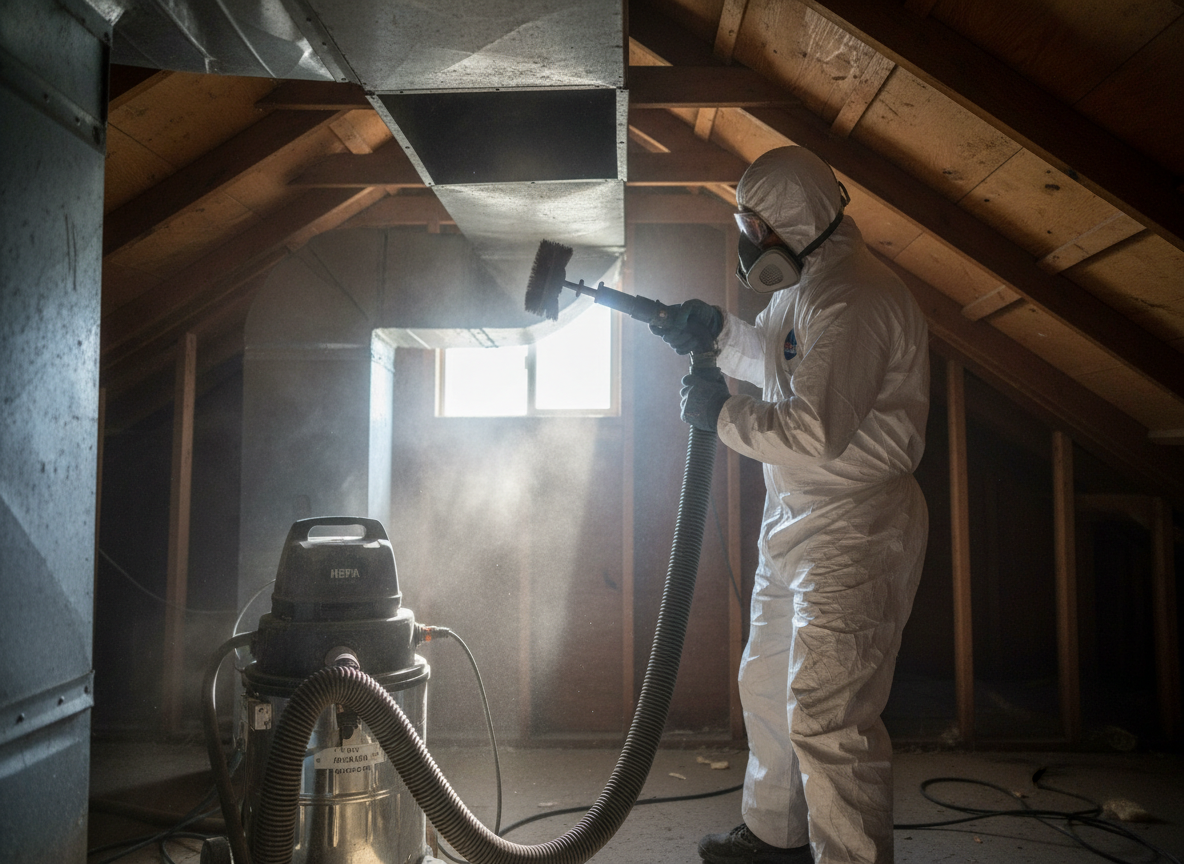
Oakley features many pre-1960 brick and frame homes with original galvanized or flex duct runs that trap construction debris, pet dander, and seasonal pollen. Cincinnati summers bring high humidity that promotes mold growth inside poorly insulated ducts, while winter heating cycles push fine dust through unsealed joints. Technicians at Orbit Wrench start every job by mapping the full trunk and branch layout from the attic or crawlspace access points common in these neighborhoods before any equipment enters the system.
Standard shop-vac attachments often miss the 90-degree elbows and long horizontal runs found in Oakley basements and second-floor additions. Negative-air machines with HEPA filtration pull contaminants without pressurizing the home, and rotating brushes sized for 4-inch to 8-inch ducts break loose caked material without damaging thin metal walls. After cleaning, visual inspection through access panels confirms no residual buildup remains at the furnace plenum or register boots.
Homeowners in Oakley sometimes attempt DIY cleaning with leaf blowers or store-bought brushes, which can dislodge debris into living spaces or damage flexible duct connections. Professional equipment reaches the main trunk lines running through finished ceilings without demolition. Service calls originate from the shop at 2435 Williams Ave and cover the full Oakley area plus adjacent Cincinnati neighborhoods on a 24/7 schedule.
Technician insight
In Oakley the thing that catches most people out with professional air duct cleaning is the long horizontal runs through finished ceilings in 1920s–1950s homes; once winter temperatures drop and the furnace kicks on, settled debris from those inaccessible sections gets pushed into every room and standard brushes never reach the elbows without the right length extensions.
Oakley Two-Story With Blocked Second-Floor Runs
A homeowner in Oakley reported weak airflow from upstairs registers after the first cold snap. Inspection showed the main trunk running through the finished ceiling had collected years of construction dust and insulation fibers at two 90-degree elbows. Negative-air equipment was set up at the attic access and rotating brushes cleared the full length without opening drywall. Airflow returned to normal and the homeowner avoided any ceiling repairs.
How it works
- 1
Initial System Mapping
Technicians locate every accessible trunk line, branch, and register in the home, noting duct material and any existing damage before equipment setup.
- 2
Negative Air Containment
A sealed negative-air machine with HEPA filtration is connected to the main trunk to capture loosened particles and prevent them from entering living areas.
- 3
Mechanical Agitation and Extraction
Rotating brushes and compressed air tools dislodge debris along the full length of each run, which is then pulled into the containment unit.
- 4
Final Verification
Each section is re-inspected with a camera scope and airflow is tested at registers to confirm the system is clear before the equipment is removed.
Pricing
Pricing varies by home size, number of stories, and duct condition; contact Orbit Wrench for an upfront quote based on an on-site assessment.