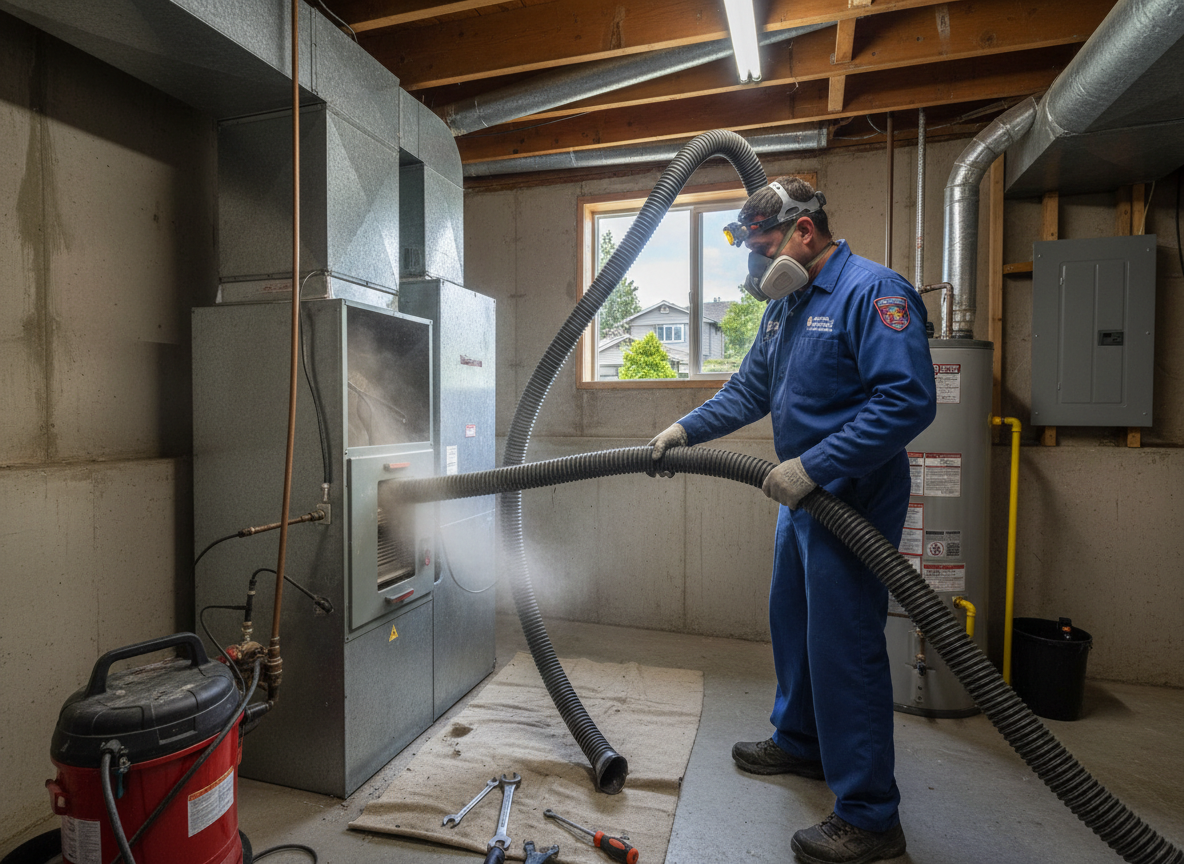
Oakley’s housing stock includes many mid-century brick homes and bungalows with original galvanized or flex duct runs that have settled over decades. These systems often collect construction debris from nearby renovations along Madison Road plus seasonal pollen and humidity that Cincinnati summers push through the vents. Whole house cleaning requires removing each register, mapping every trunk and branch line, and using negative-air machines sized for the actual square footage rather than one-size-fits-all equipment.
Access points in Oakley attics and crawl spaces are frequently tight because of low-pitch roofs and finished basements added in the 1970s and 1980s. Technicians must protect finished surfaces while maneuvering 12-inch hoses through small openings without disturbing insulation or knob-and-tube wiring still present in some blocks. Skipping these steps leaves residue that circulates again within weeks once the furnace or AC restarts.
Edge cases appear when homeowners have added second-floor rooms or finished lower levels without updating the original trunk lines. These extensions create low-velocity pockets where dust and moisture collect, especially during the freeze-thaw cycles common from November through March. Proper cleaning includes camera inspection before and after to confirm airflow is restored to every branch rather than just the main runs.
We always verify that dryer vents and bathroom exhausts tie into the system correctly, since many Oakley properties route these lines into the main ducts, increasing lint load. This step prevents future clogs that standard vacuum-only services miss.
Technician insight
In Oakley, the thing that catches most people out with whole house air duct cleaning is the number of 1960s-1970s homes where bathroom exhausts were tied into the main supply ducts; those hidden lint traps stay wet from our humid summers and require extra agitation passes that standard jobs skip.
Madison Road Bungalow Restricted Runs
Homeowner noticed weak airflow on the second floor after finishing the attic. Inspection showed original flex duct pinched at two points from added insulation and bathroom exhaust routed into the supply trunk. We isolated the affected lines, performed targeted agitation and extraction, then verified restored flow with the camera. Air delivery improved without replacing any ductwork.
How it works
- 1
Site Inspection
Walk every accessible duct run, note access points, and document existing debris or moisture issues specific to the home’s age and layout.
- 2
Register and Vent Removal
Remove and label all registers, then seal the system to create negative pressure before agitation begins.
- 3
Agitation and Extraction
Use whips, brushes, and compressed air on each line while the vacuum pulls debris out, paying extra attention to flex runs common in Oakley attics.
- 4
Final Camera Check and Reassembly
Inspect cleaned ducts with a camera, reinstall registers, and confirm airflow before leaving the property.
Pricing
Pricing depends on number of runs, access difficulty, and whether flex duct or moisture issues are present; we provide upfront quotes after inspection.